How to Draw Dogs in 3 Simple Steps
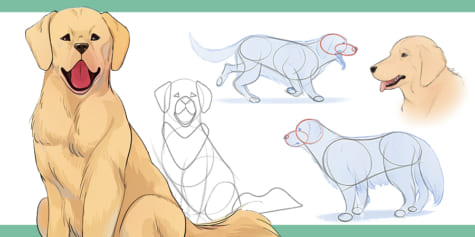
Dogs are lovable because they're cute and expressive. Learn how to draw a dog using a simple combination of shapes in this easy step-by-step drawing tutorial.
If you can draw simple shapes, then you can draw a dog! We’ll break it down in this easy step by step guide: starting with the overall shape of the dog, then adding more canine characteristics, and finally, the details that make each pooch unique.
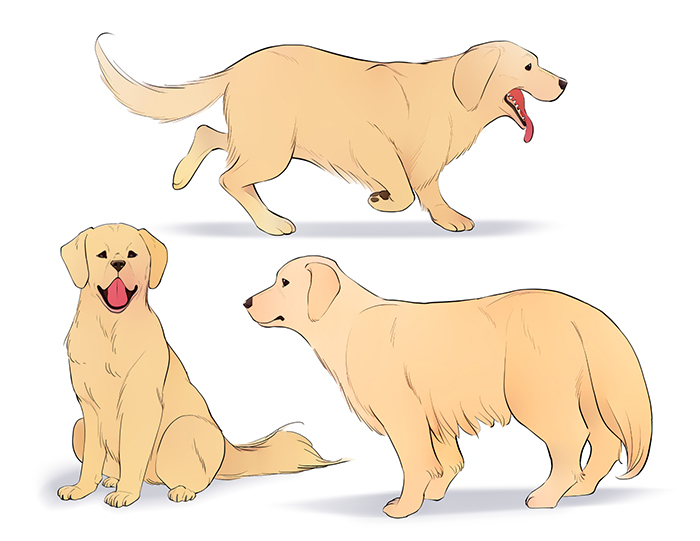
We’ll be using the ever-popular golden retriever for this dog drawing tutorial.
The golden retriever is a popular dog breed due to its large size, gentle nature, and loyalty. They have gentle eyes that make you smile, adorable droopy ears, and a rich coat of fur. Read on for how to draw this cute dog breed in simple steps!
Contents
1. Sketch the overall shape
Before you start to draw the dog’s features in realistic detail, make a sketch to capture the overall shape of the animal. Sketches help you understand the overall drawing, including contours, the direction of the head, three-dimensional structure, as well as light, shadows, and color. There are many ways to do this, but this time, let’s start by drawing a combination of circles to get the dog form down.
Replacing a shape with a circle is the simplest and easiest approach for drawing. It’s very useful because it can be applied regardless of your art style.
Drawing the dog’s body
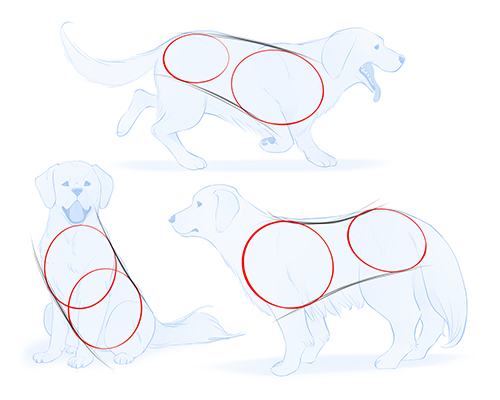
Let’s start with the dog’s torso. When drawing the torso, use two circles to represent the volume around the ribs and the pelvis. Golden retrievers are muscular, so draw the circle for the ribcage (upper body) larger than the circle for the pelvis (lower body). Then draw lines connecting the two circles to form the body’s foundation. Be aware of how the belly dips in as it reaches the pelvis. Rendering this helps express agility when drawing hunting dogs.
How you position and connect the first two circle expresses the animal’s posture, as in the images below. To get a feel for this, try observing and drawing some different poses: standing, sitting, walking, and rolling over. Dogs come in all shapes and sizes, so be sure to try different sets of circles for different species.
Creating the legs and paws
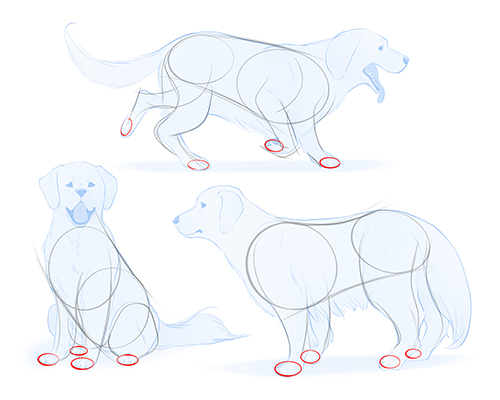
When you’ve got the body down, it’s time to add the legs and paws. Draw four little ovals for the paws. You can draw all sorts of poses depending on where you place the paws. When drawing a standing dog, make sure the paws align with the angle of the ground.
After drawing the circles for the paws, connect them to the body. Focus on the overall shapes and how they connect together. In most four-legged mammals, including dogs, the bone structure of the feet is similar to that of humans. Therefore, the wrists, elbows, and shoulder joints all connect back to the torso.
For long-haired dog breeds like golden retrievers, the joints in the legs may be buried and hidden. Fur and skin also move with the bones, creating a large, cohesive shape. It’s like wearing large, baggy clothes. Drawing based on a skeletal structure is compelling, but drawing based on overall shape is also an effective approach.
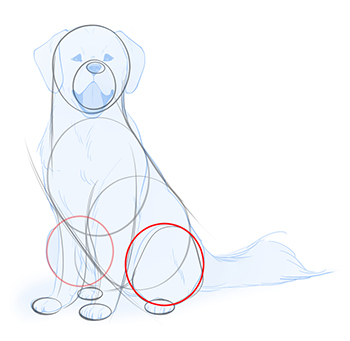
Drawing tip for a sitting dog:
Sketch the hind legs with a circle instead of lines to represent the overall shape.
Placing the dog’s head
First, draw a circle for the skull. The skull of a hunting dog, like a golden retriever, is oblong. After connecting the head with the torso, draw an oval to create the chin. You can adjust the length of the nose and mouth to draw older dogs or different breeds of dogs. If you know where the dog is looking, you can adjust the position of the jaw, which in turn creates a sense of movement.
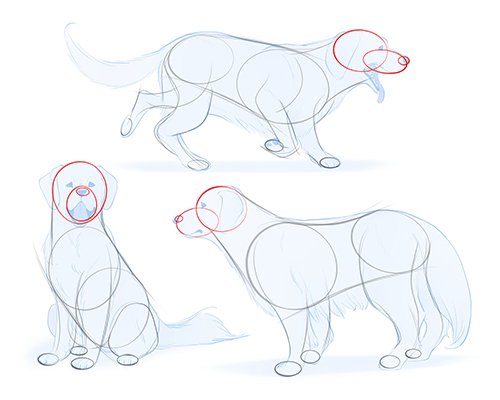
Now we have a simple drawing of a dog’s body by just by using circles.
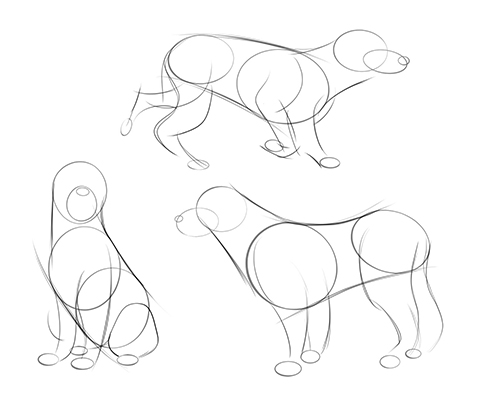
2. Adding features with simple shapes
Now we will go in and draw the more detailed features of the dog step-by-step. Even the smaller parts of a dog that appear complex can be loosely captured with a combination of shapes and lines. Let’s break down each feature into simple silhouettes while thinking about the overall form.
Parts of the dog’s head
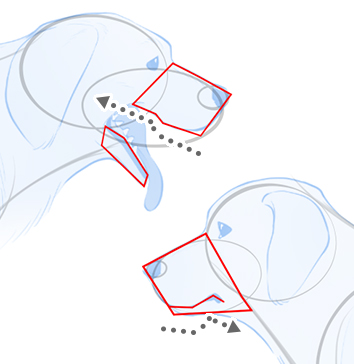
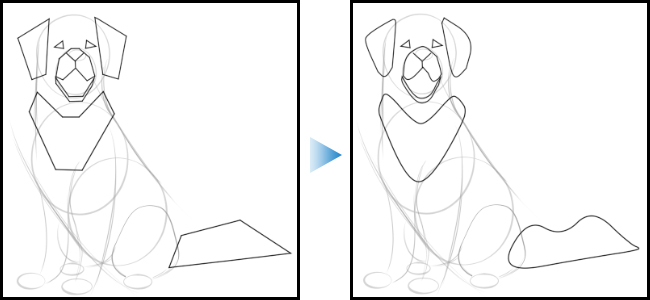
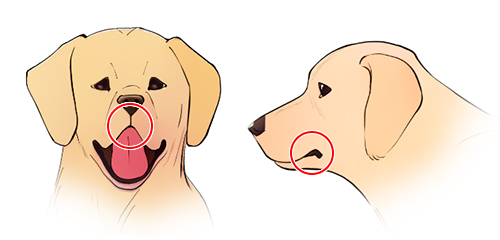
First, capture the shape of the jaw. Draw the dog’s snout roughly in the shape of a skewed rectangle, then add a line to separate the upper and lower parts. A golden retriever’s snout has sagging skin and an upturned mouth that gives the impression of a smile. It also features a sudden drop at the corners of the mouth. When viewed from the side, the snout should be divided by an S-shape in the lower part of the skewed rectangle.
When drawing the snout from the front, draw a gentle W-shaped line. In the middle of the line, draw another line connecting up to the nose. Make sure the corners of the mouth line arch out.
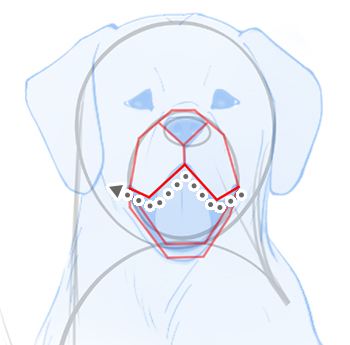
The golden retriever’s eyes are a little droopy, which also makes them look friendly and gentle. Draw the eyes in a triangle to capture the droopy shape.
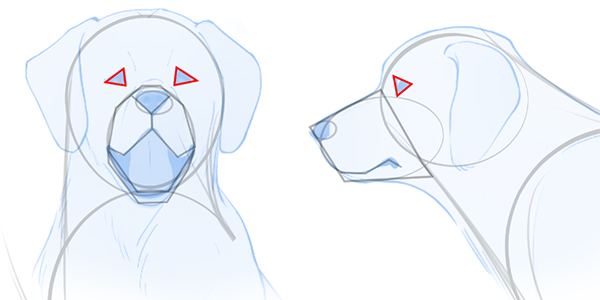
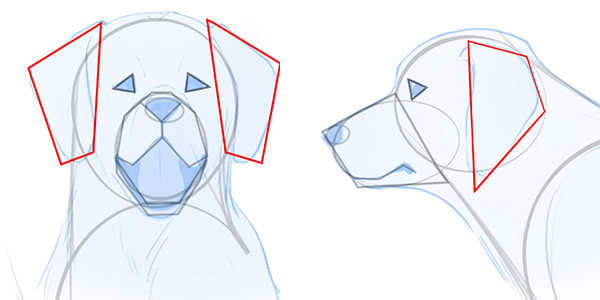
The ears attach to the back of the head and flop down towards the front. Try to capture the sagging appearance of the ears with triangles or squares that cover the sides of the dog’s face.
Parts of the body
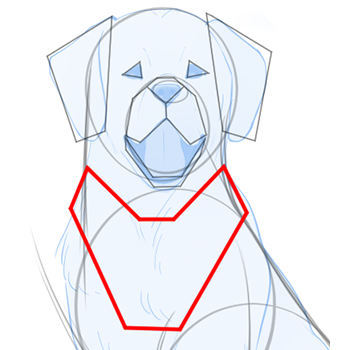
The hair around the dog’s neck is thick and fluffy, so add a furry look around the neck to convey this. Create the hair around the neck via a napkin-like shape. Adjust the size to match the amount of fur you want to draw.
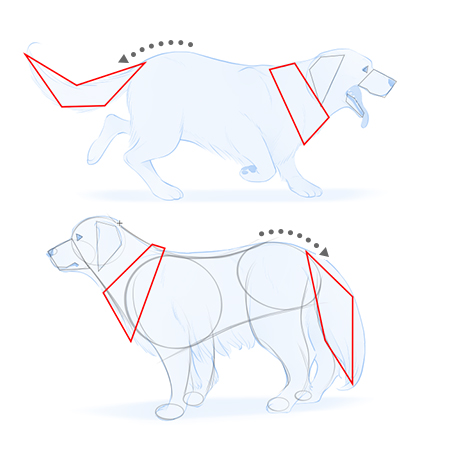
Draw the tail along the slope that descends from the rump. In some dog breeds, the length and volume of the tail can contribute to a dog’s personality. The golden retriever has a bushy tail, so it’s a good idea to exaggerate its volume. Drawing to match the tail’s movement to the dog’s pose will make the picture come alive.
Once all of the body parts are in place, start rounding the straight lines and corners. This completes a lifelike dog silhouette.
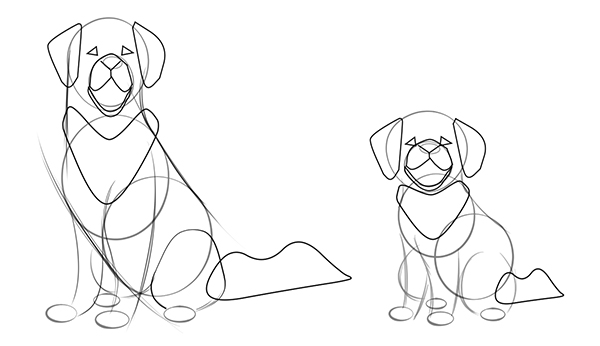
By changing the balance of the shape and size of the dog, you can draw dogs of different ages and breeds. .With these steps, you also know how to draw a puppy and more! Be sure to give it a try.
3. Create unique dog characteristics
Now that the rough shape is drawn, we can go in and add detailed canine features. To draw the fur, it’s better to draw it in bunches to achieve the proper shape and expression rather than one hair at a time. Add the finishing touches by thinking about the specific dog breed and what we want to emphasize in our drawing.
Face
Golden retrievers have black lips noticeable at the crease leading to the nose and at the corners of the mouth. If the dog’s mouth is open, draw the lips along the edge of the lower jaw, as in the image below.
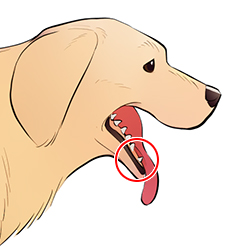
If the tongue is sticking out, it will cover the front teeth of the lower jaw. Having the canine teeth peek out from the sides of the tongue makes the mouth appear more three-dimensional.
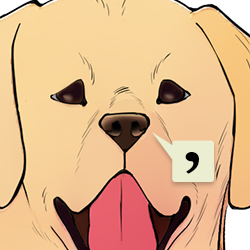
Here’s a drawing tip: the nostrils look like commas.
Legs
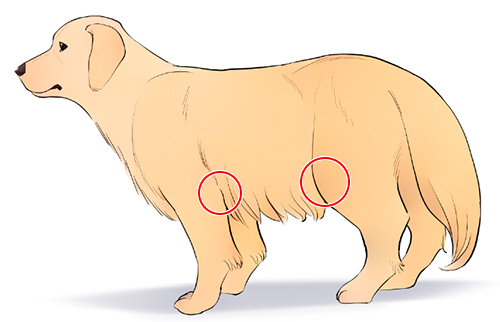
A dog’s legs have a characteristic shape. The upper joints in dogs are located close to the torso.
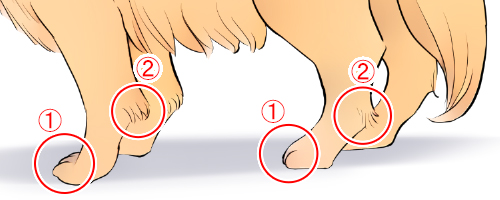
The joints closest to the ground (2) are the heels, and (1) are the toes. Be sure to emphasize these joints depending on the dog breed.
Fur
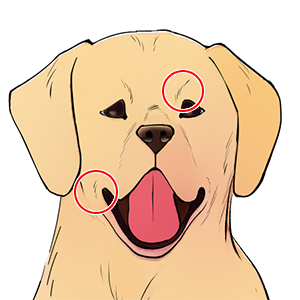
In contrast to the fur on its body, a golden retriever has short, prickly fur on the head. The areas that move a lot have pronounced wrinkle and fur. The eyebrow lines, nose muscles, and mouth area add to a dog’s expression.
The long fur on the body falls under gravity, adding movement to the pose. Visualize the body under the fur, the hairline, and the direction in which it grows. In the case of a golden retriever, it has bushy hair around its neck, under its belly and down from its legs. Draw while keeping the dog’s contours in mind.
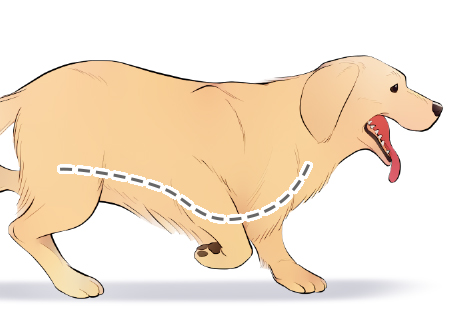
It’s interesting to see how the shape of a long-haired dog can change as its fur grows or is trimmed. It’s easy to distinguish a dog’s features just by being aware of where there is more fur, where there is less fur, and where body lines are more prominent.
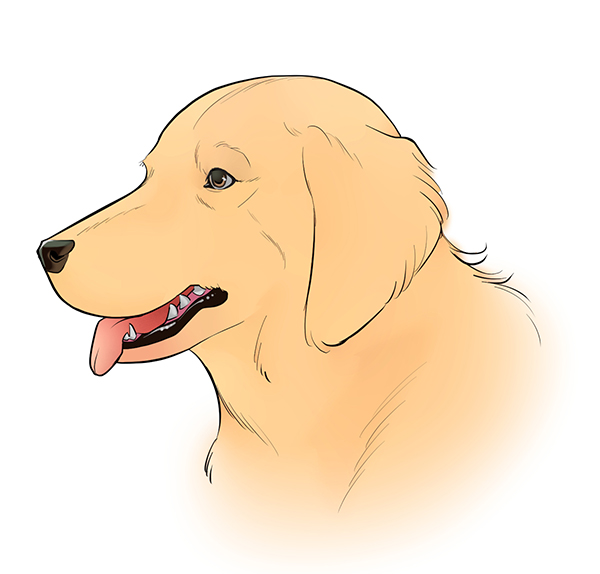
Finally, add the finishing touches! Damp eyes, nose, mouth, and tongue help create a lively, dog-like expression. Add highlights and reflections to create a glossy finish. All these details can bring your dog drawing to life.
4. Conclusion
How did it go? In this article, we used the golden retriever as an example to show how to draw a dog, but this approach can easily be applied to other breeds of dogs and other four-legged animals. Remember to break your drawing into shapes and then add details. And keep on practicing!
We hope this tutorial will help when drawing your own expressive dogs and other animals!
Want to learn how to draw other animals? Check out the following tutorial: