How to Draw Pixel Art: A Tutorial
WHAT IS PIXEL ART?
Before we delve into how to draw pixel art, it’s important to understand its origin and why it’s such a popular art style.
Pixel art is the starting point of computer graphics and digital art as we know them today. This style emerged in the late 1970s because of constrained computer graphics with low-resolution. So originally, pixel art came about not as an intended ‘style’, but rather the result from getting creative with the technological restraint of that time.
As computers evolved, graphics advanced, opening doors for designers to create without limitations.
Creating art with these limitations in mind is the core of pixel art, and putting yourself up for a challenge is definitely one of the ways to sharpen your skills and techniques to become an even better artist.
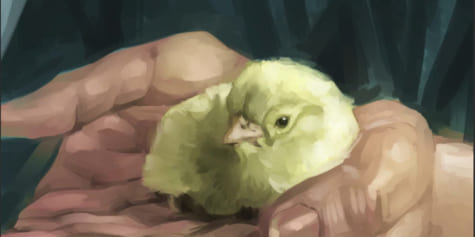
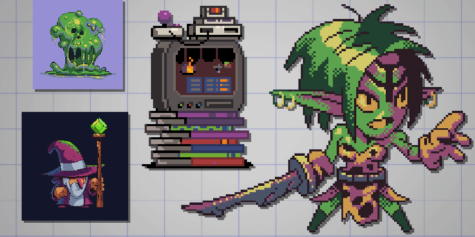
Below are some examples of my pixel art.
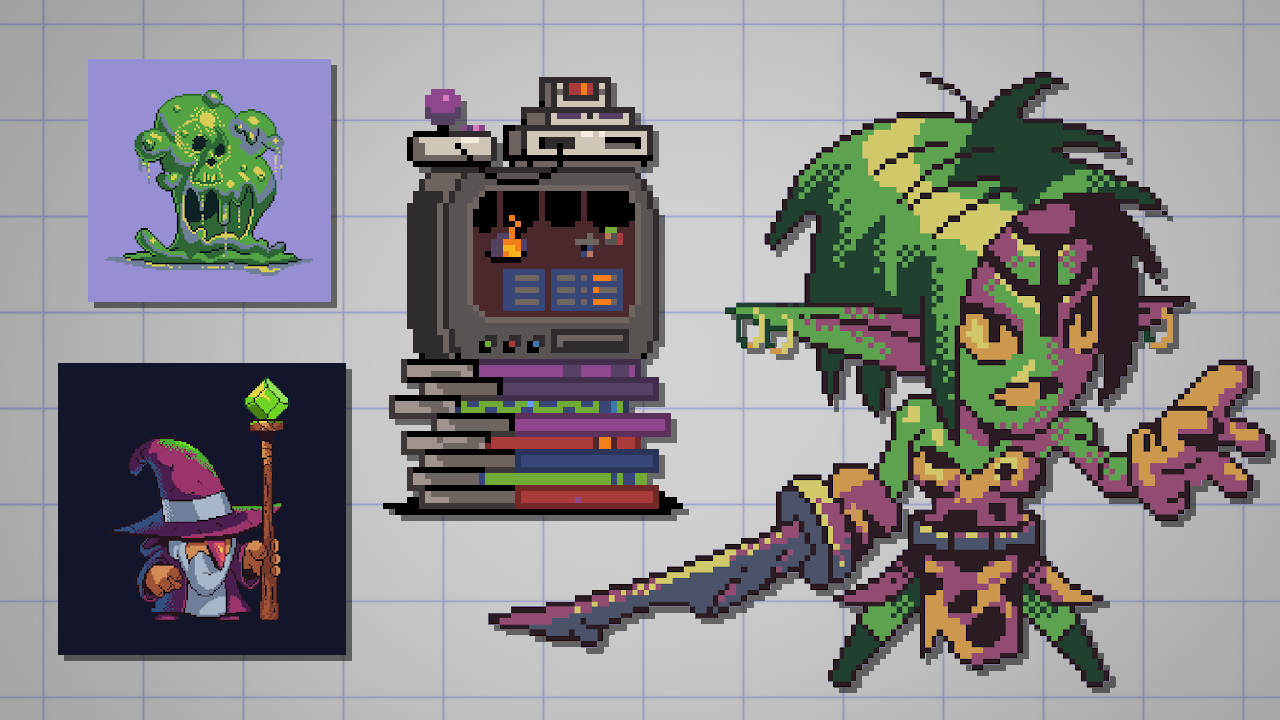
In this article, I’ll highlight some basic techniques and guidelines so you can start making your own pixel art drawings.
All the information here can be applied to any ‘style’ and any software. The technical side of this art form is important, especially if you want to make an homage to a video game. It’s also important to remember that you don’t need to create a 32×32 pixel size artwork with only 3 colors if you don’t want to. However it may be beneficial to learn the basic techniques before attempting to make anything too complicated.
BEGINNER PIXEL ART EXERCISE
Let’s start simple with an easy pixel art project:
Create a 64×64 pixel portrait.
You can draw anything you like, but for this particular project, let’s create an artwork that can be used as a social media profile picture.
SET UP YOUR CANVAS
For this article, I’ll be using Clip Studio Paint and while there are many awesome tools for making pixel art, Clip Studio Paint in particular is a great example of a modern standard graphics software. This approach can easily be done in other drawing apps as well, so follow along using the app of your choice!
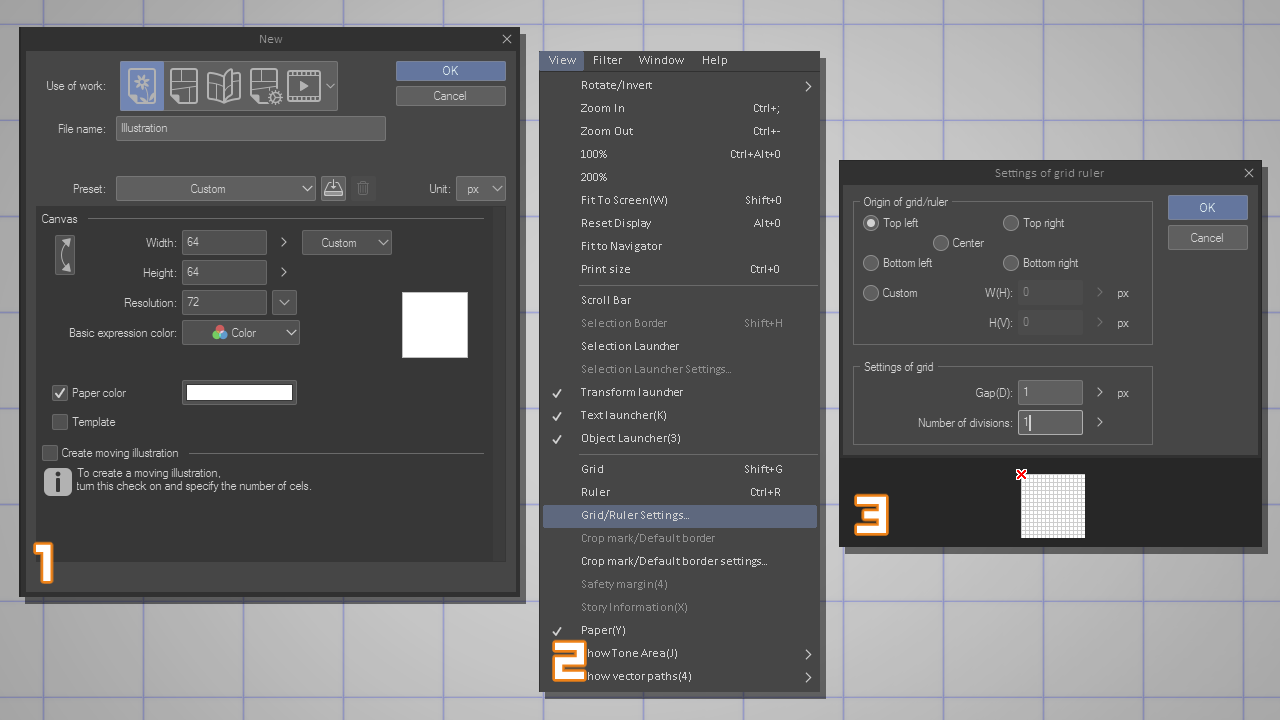
- Create a 64×64 pixel document (1)
- Go to View > Grid/Ruler Settings (2)
- Configure it with the following so you can see a grid with every single pixel. You can turn the grid on/off anytime using the Shift+G shortcut on a computer. (3)
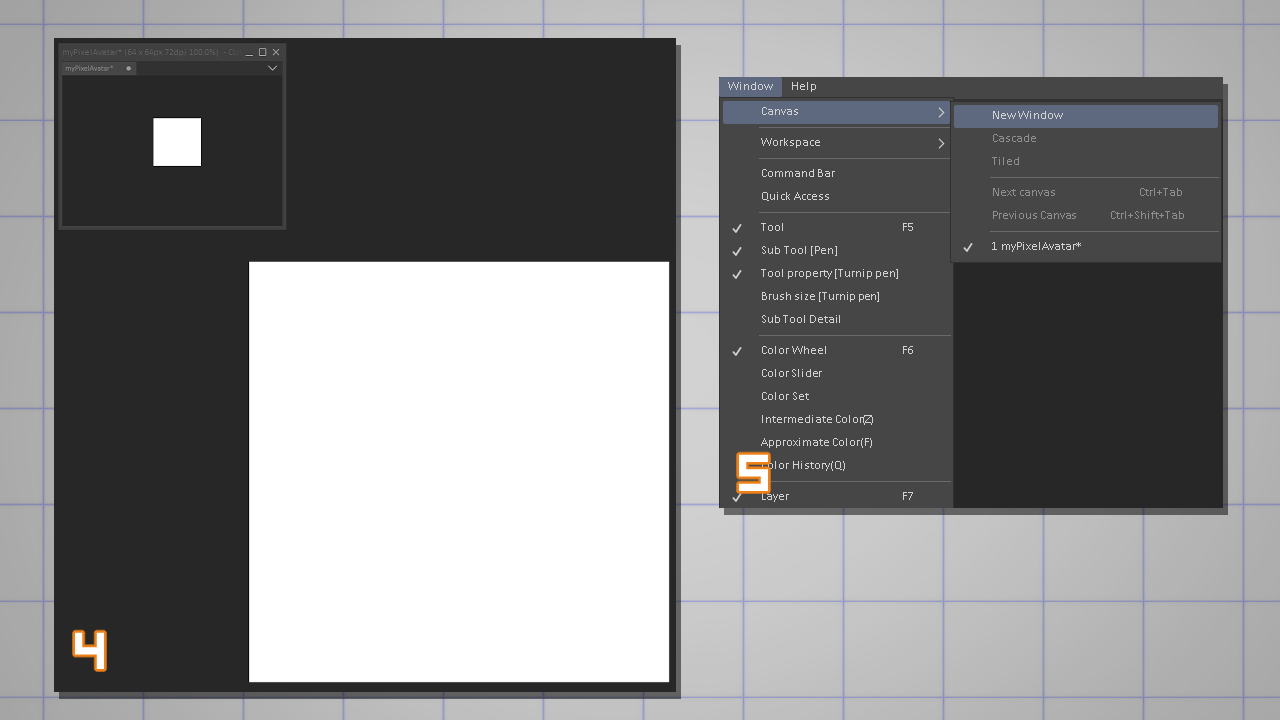
- When drawing pixel art, it’s good to work on it zoomed in, while simultaneously keeping an eye on the full-size canvas. (4).
- To create a secondary view of your current canvas, go to Window > Canvas > New Window and open a new instance of the current canvas. Set it to 100% and place it in your workspace (5).
MAKE A PIXEL ART BRUSH
To make pixel art, having a brush that is already pixelated will make the creation process much easier. So what is the difference between a pixel art brush and a regular brush? With regular brushes, automatic anti-aliasing is applied, which smoothes the edges of the graphics, as you can see in the example below. The anti-aliased edge (7) has an automatic gradient of pixels to give the shape a smoother contour.
On the other hand, we want the aliased edge (6) when creating pixel art. Later, we can soften the edges, if needed, by adding anti-aliasing manually.
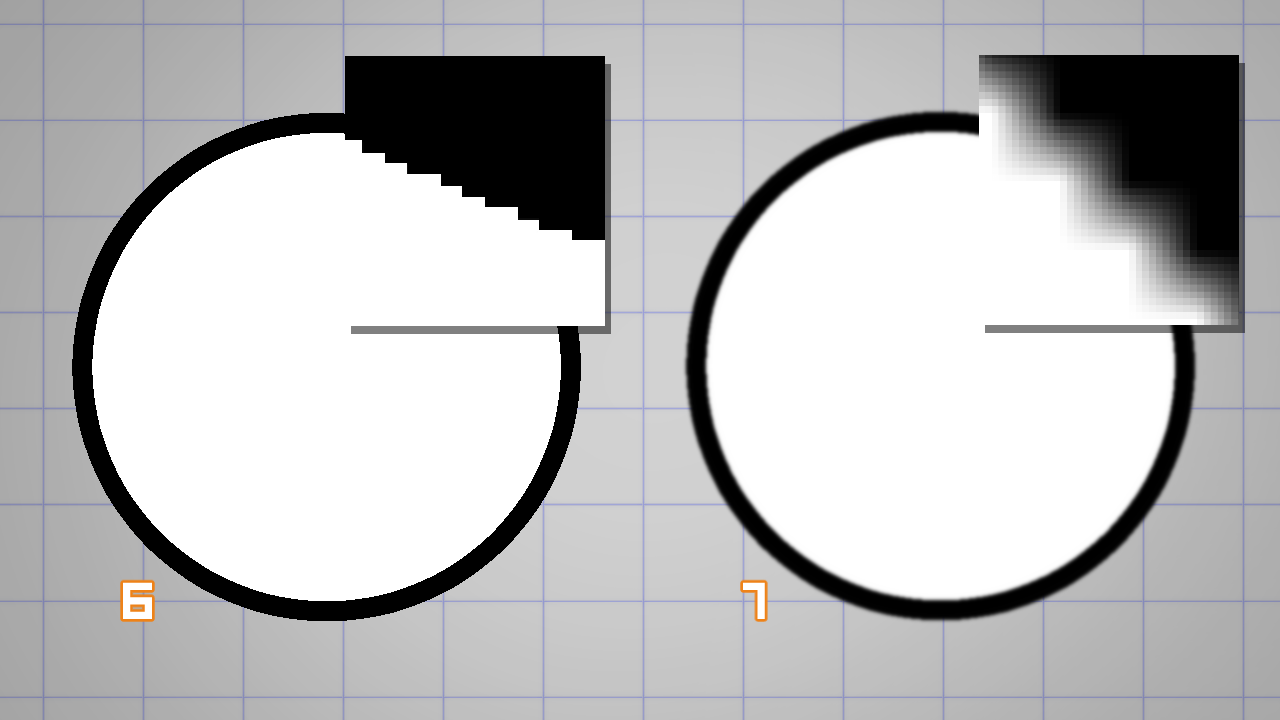
A rule of thumb when using any software to create pixel art is to disable the anti-aliasing setting in brushes, tools, and transformations.
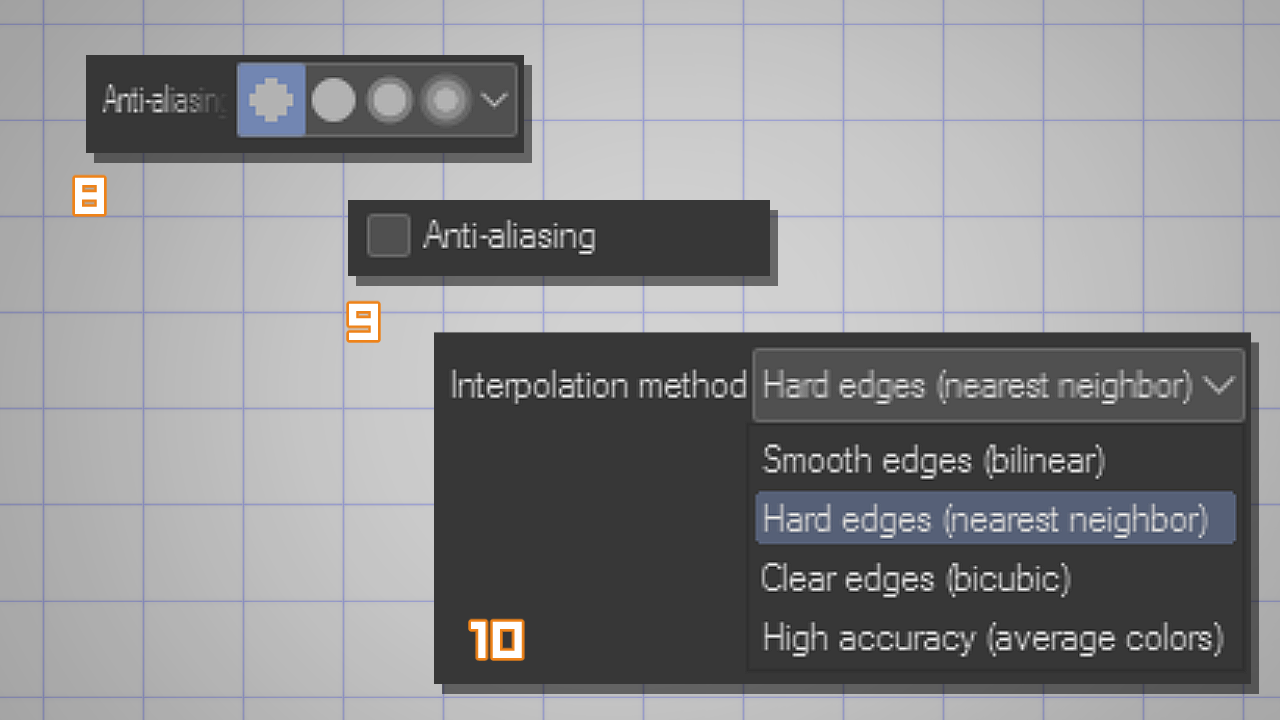
In Clip Studio Paint, you have to turn off anti-aliasing in the following:
- Toggle the anti-aliasing setting in the Brush Tool Property (8)
- Toggle it on/off with the checkbox for tools like Selection, Fill, Text, eg. (9);
- Choose Hard edges under Interpolation method while using Edit > Transform (10);
What’s really cool about Clip Studio Paint is that it comes with a pixel art pen. It’s called ‘ Dot Pen ‘ in the Marker category (11).
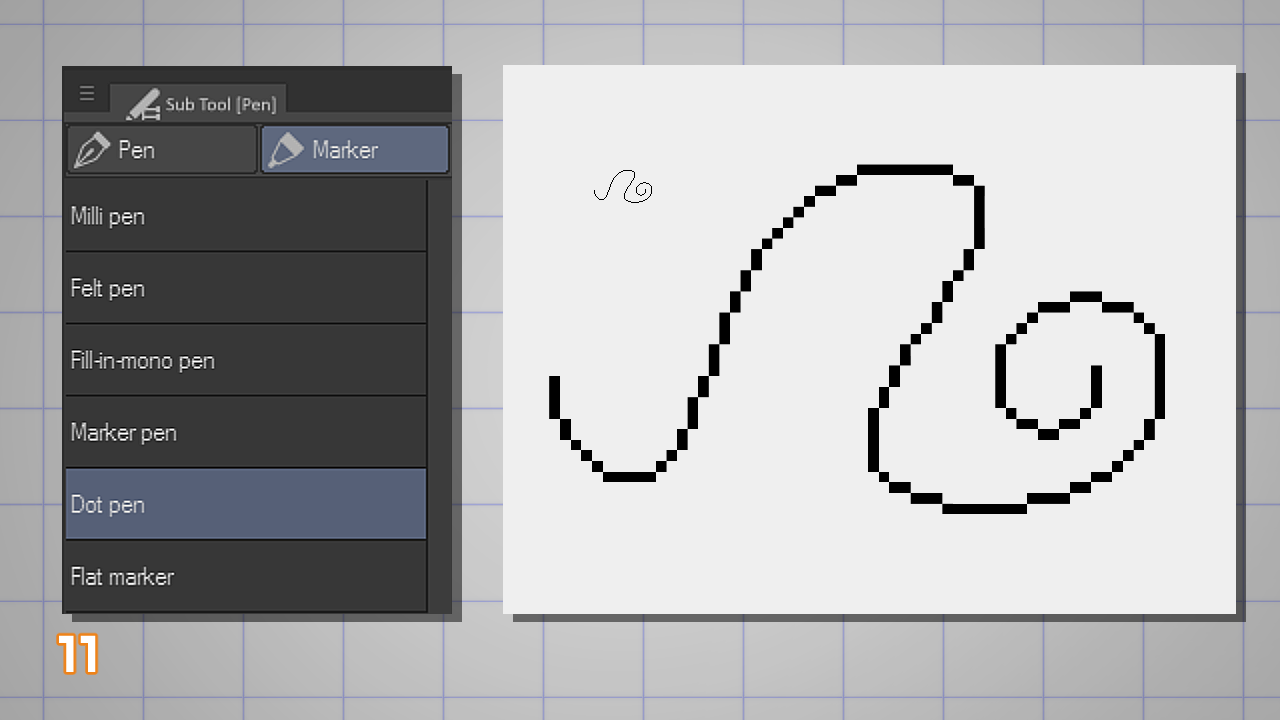
This is the simplest drawing brush available. It has a fixed 1-pixel size, anti-aliasing turned off, and no option for stabilization or color mixing.
For the following tutorial, I will be using this pixel brush, so I recommend that you do the same. You can duplicate any of your ‘common’ brushes and use them for pixel art later as long as you reduce brush size to lower values and disable anti-aliasing.
DRAWING THE LINEART
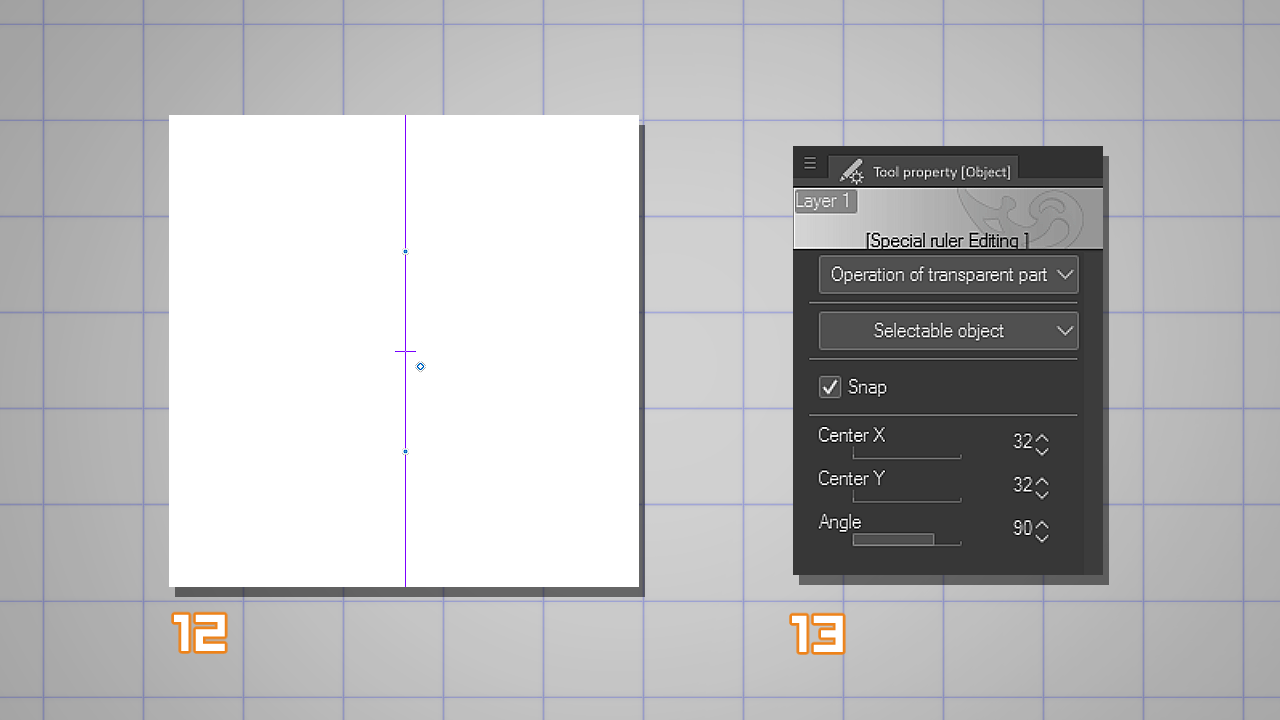
In this tutorial, I will be drawing a front-facing portrait, so I’ll start the drawing using the Symmetrical Ruler (12).
Place the Symmetrical Ruler on the Canvas and, to make sure it’s on the dead-center, use the Object tool > Tool property to input values manually (13).
In this case, I changed the Center X and Center Y values to 32, which is half of my total canvas size (64 pixels).
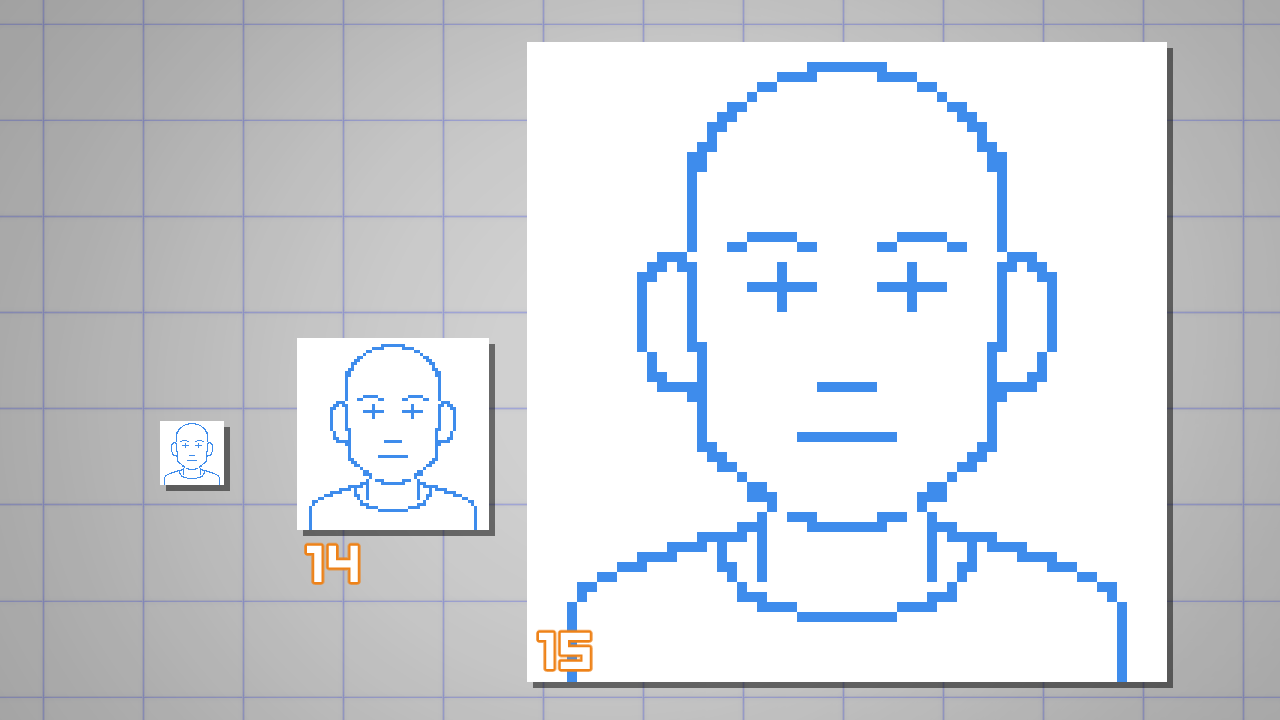
Now, select your Dot Pen and start drawing. Since this brush can’t be resized, it’s a good idea to zoom in on the canvas you’re drawing (15) and use the duplicate view as a reference (14).
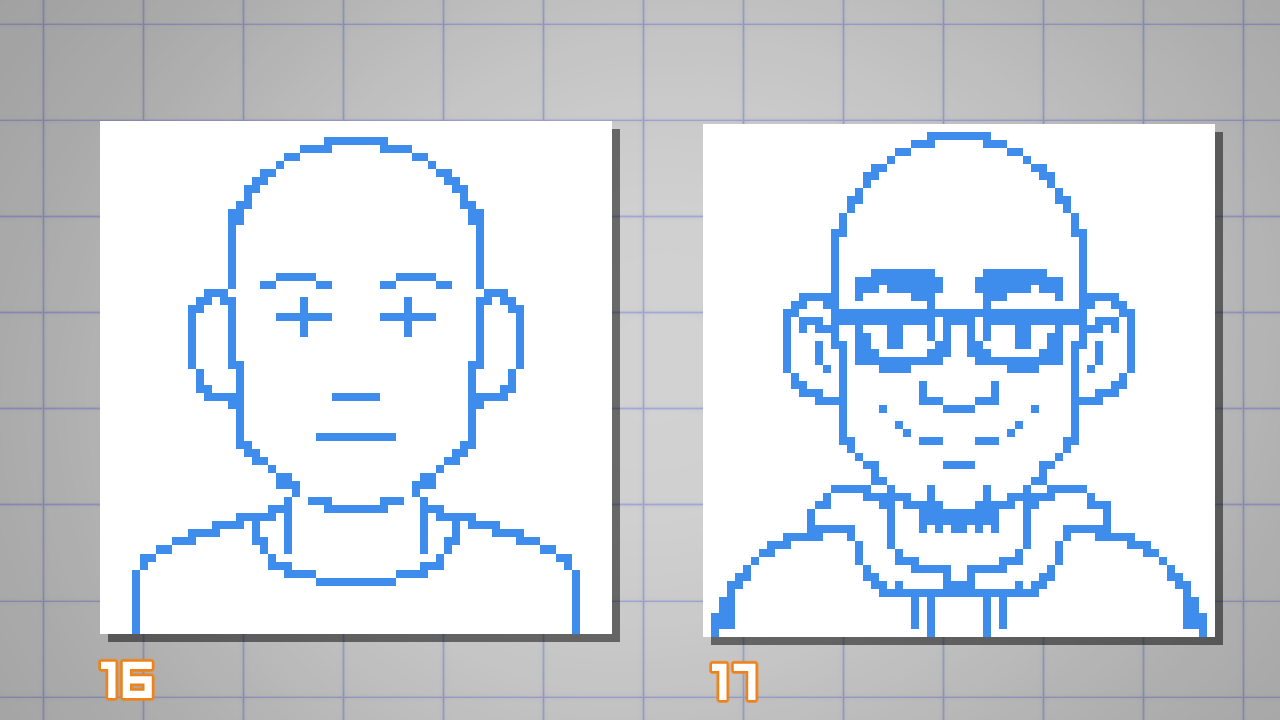
I started my portrait by drawing an initial sketch to find the construction of the head (16) and then I started adding details (17).
You can use any color you want to start your sketch – I chose blue.
Once you’re done with the sketch you can proceed with the linework.
Before adding the final lines, let me show you a simple technique for drawing lines and curves in pixel art.
In the example below, the linework (18) doesn’t look smooth because there are a lot of duplicated pixels or ‘doubles’, where it should be a single-pixel line.
You can fix those doubles by removing any adjacent pixels on the curve. In the example (19), I removed all pixels marked in red.
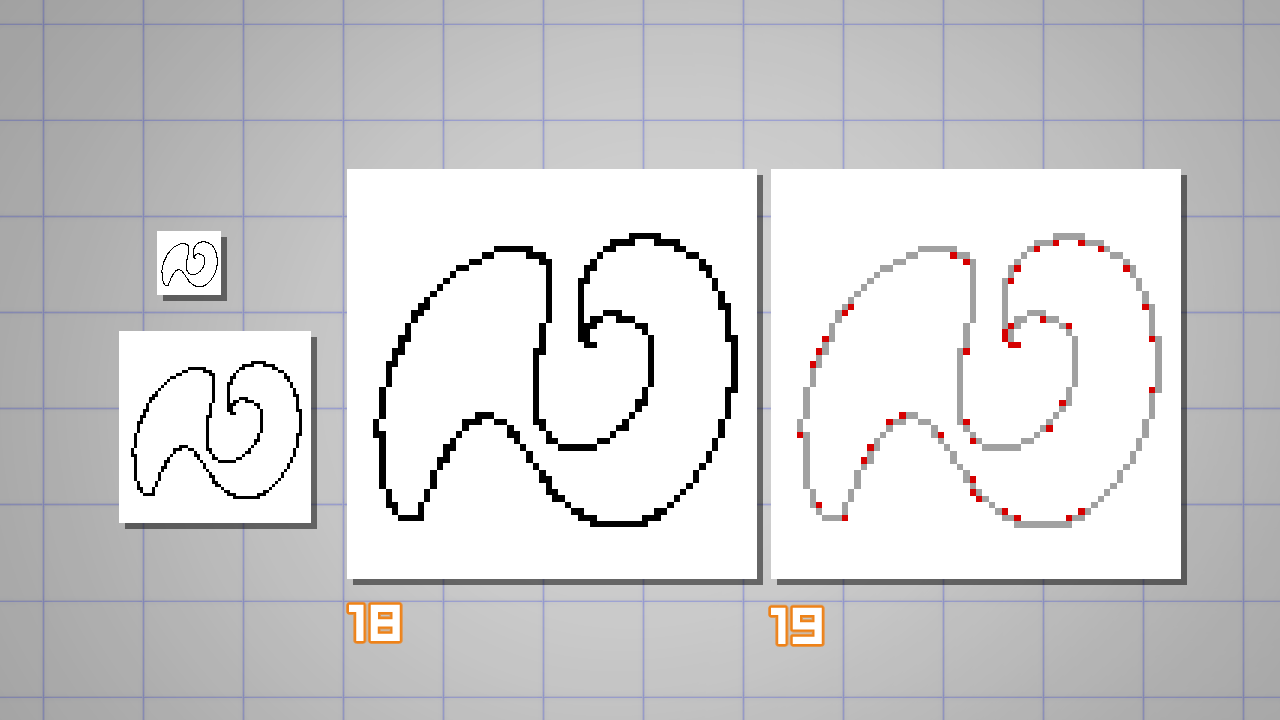
When working on your sketch or linework, make sure you look out for those ‘doubles’ to clean your lines.
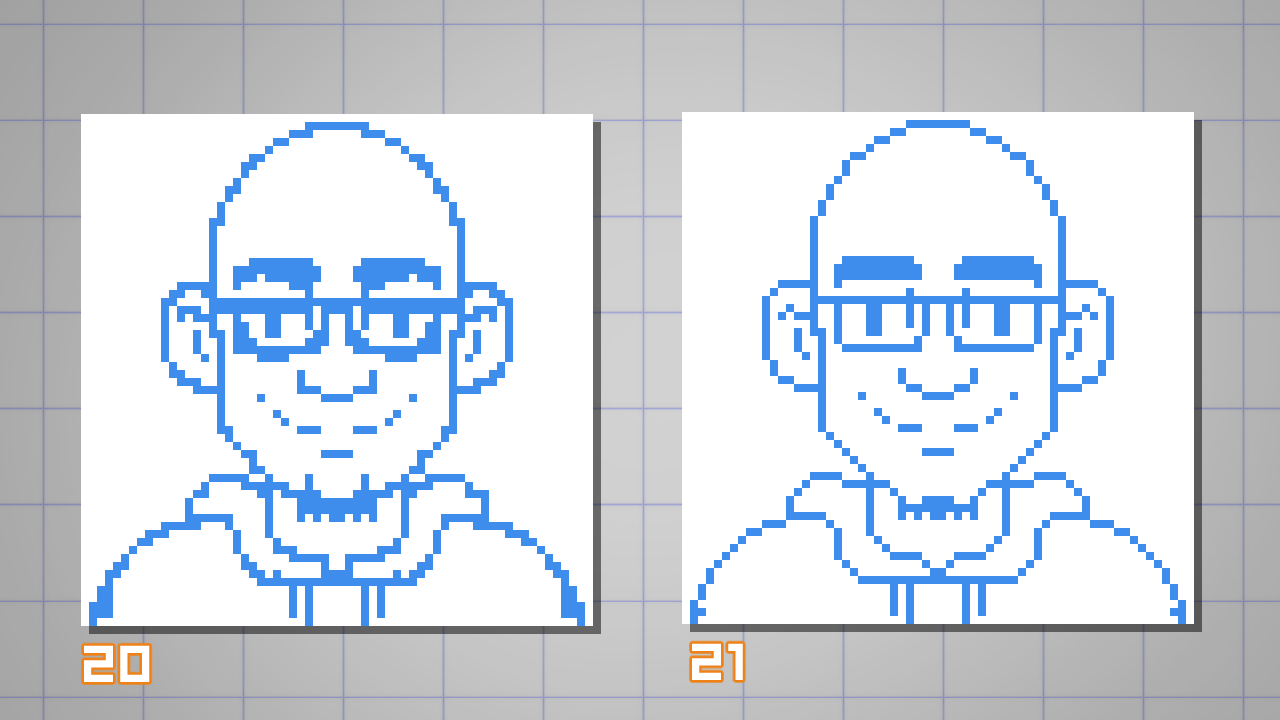
So if you feel that the curves don’t feel right, remove the unwanted pixels. Quick Tip: If you need to erase a pixel, you can simply switch to transparent color while using the Dot pen.
In the example below, you can see the difference between the initial sketch (20) and the cleaned-up version (21).
Before we continue with our pixel art project, let me share another technique on how to draw pixel art with you!
Let’s start fixing the drawing and adjusting some curves.
Seeing the example below (22), you can notice that the curves are a bit wobbly, and the distribution and spacing of pixels doesn’t follow a logical progression. (eg.: 3, 2, 1, 4…)
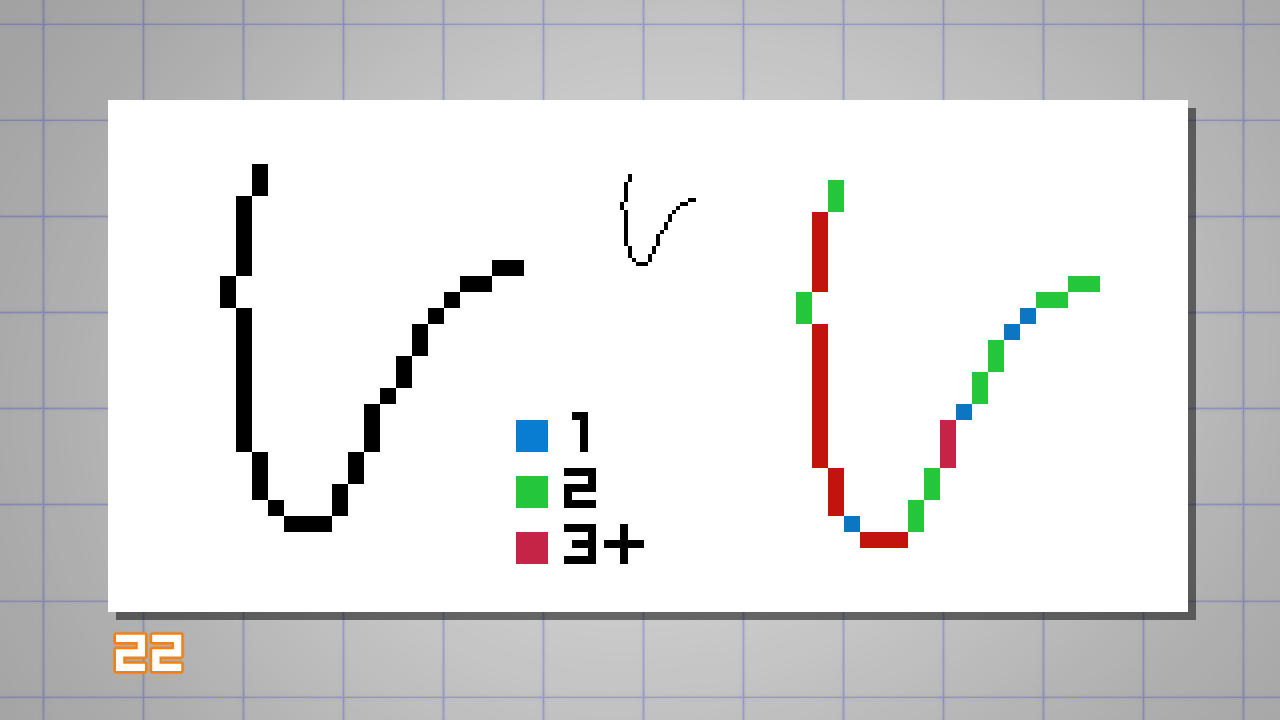
While on this improved version (23), you can see a better progression of pixels to create the curve. (eg.: 1, 2, 2, 3…)
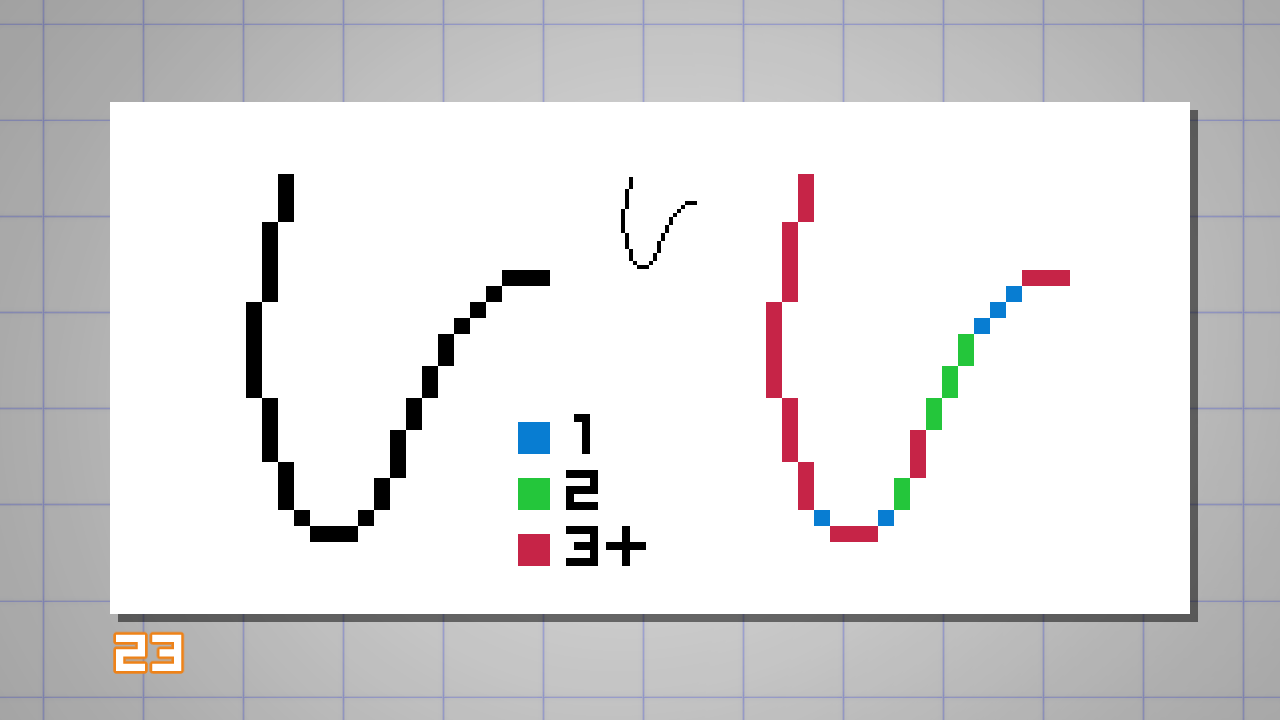
With that in mind, please try the following exercise before continuing with your drawing:
Try drawing some random lines and curves with the two concepts you just learned so far. Remove the doubles and maintain the ‘pixel progression’.
This will give you a solid grasp on contouring shapes and creating better lines in pixel art.
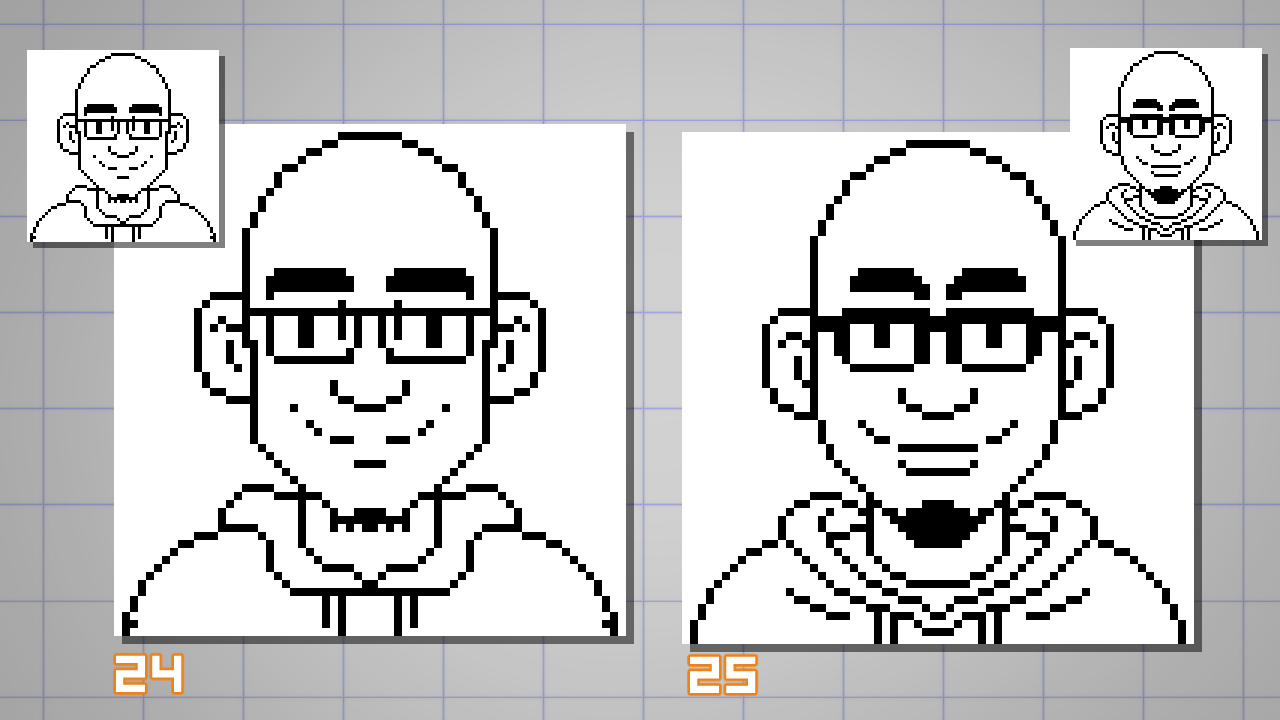
Below is my final linework (25).
I made some minor adjustments to the proportions and curves, removing unnecessary pixels to make the face more visible. Take some time to compare it with the original version (24) and notice where I applied the techniques.
COLORING YOUR PIXEL ART
The number of colors used on a sprite (a term used to describe an object in game development) depends on how authentic you want to be with the original pixel art age.
As mentioned before, you can learn a lot about pixel art by limiting yourself to a small number of colors to choose from.
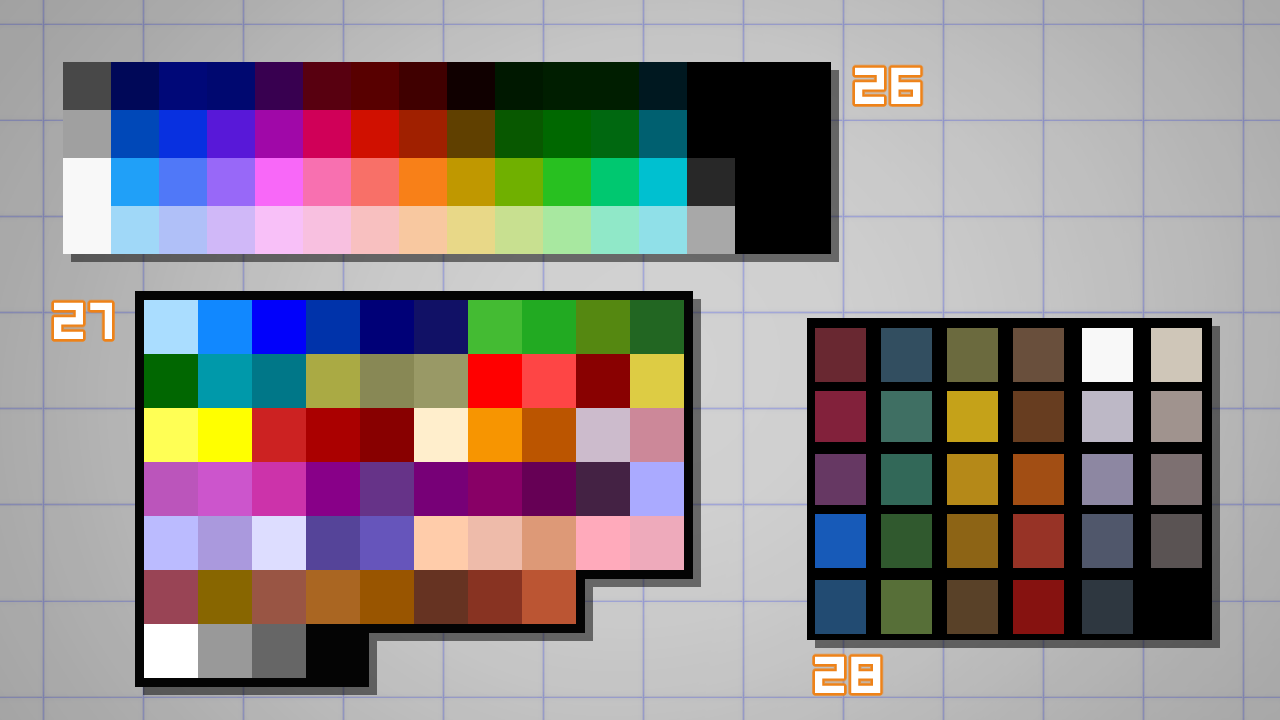
For now, I suggest you start with an easy color palette. Below are 56 colors of the palette used by the NES (Nintendo Entertainment System) videogame console (26). This way, you can replicate the video game pixel art style.
You can add more colors or make your own color palette later on, but the NES color palette is a good starting point. In the examples below you have the PC-98 computer color palette (27) and a personal one I built in the past (28);
Start by filling the lines with flat base colors, or ‘flatting’.
I’m starting with 5 initial colors, including the black linework to paint this portrait (29).
At this stage, remember to configure your Auto Select and Fill tools for the pixel art workflow, disabling Area Scaling and Anti-aliasing (30).

To add shadows on the skin color of the portrait, you can either use a darker value of the base color, or totally go wild and use different colors to make your pixel art look more pop.
Here’s another tip for you; Create a new layer on top of your layer stack, fill it with black and set the layer blending mode to Color .
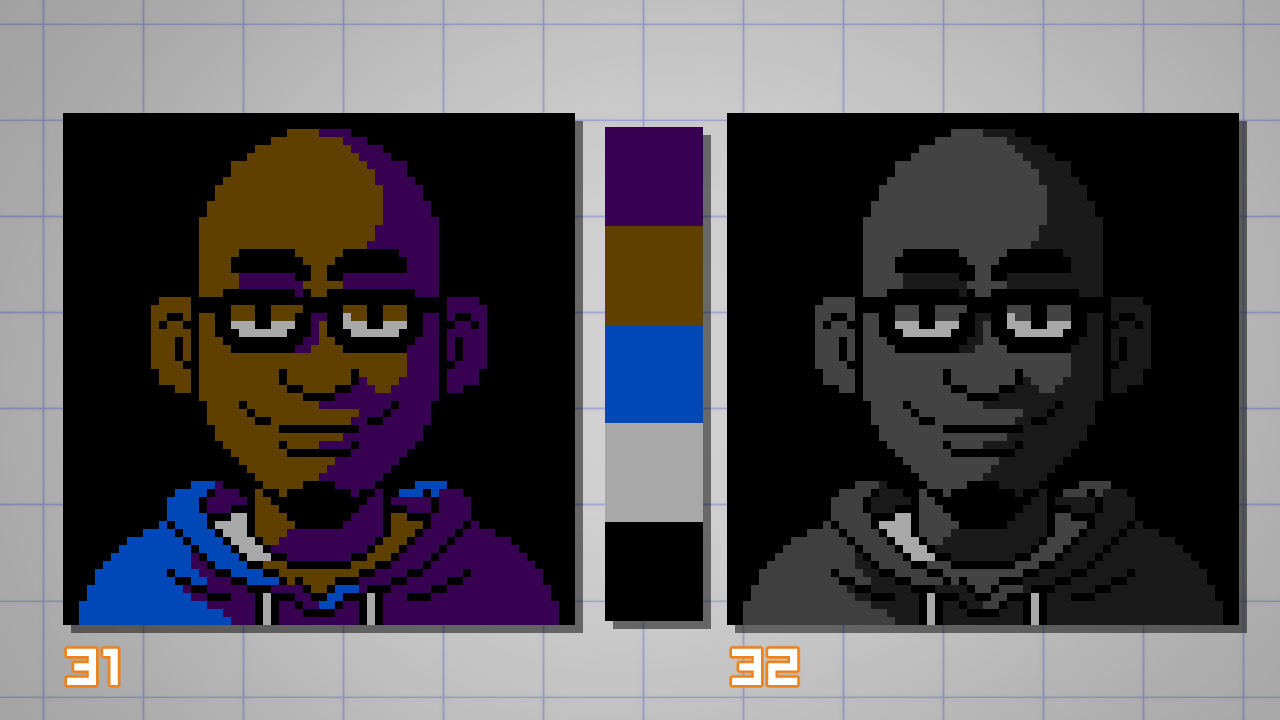
Now you can use this layer to check the value relationship of your colors (32).
In the example, you can see how I managed to use the old background color (purple) as the shade color of my brown skin (31). I prefer to go with a black background to save one color.
Again, I have to, but I’d like to exercise these limitations imposed by the NES color palette.
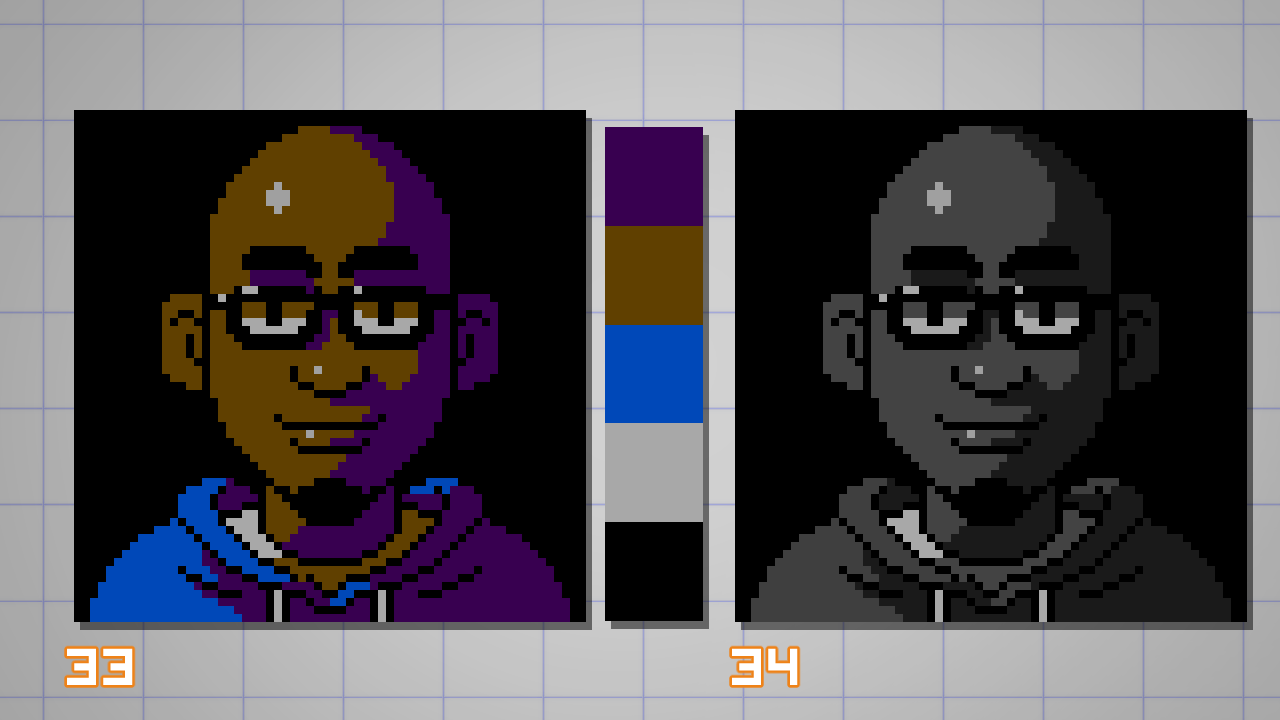
For the highlights on the skin and glasses (33), I don’t need to introduce any new colors, because checking the grayscale values (34) showed that the T-shirt color could be used.
I wanted to add some manual anti-aliasing to smooth the border between the lit and shadowed areas of the skin (36).
I could not find colors that I wanted to use to create a gradient transition from the NES color palette, so I decided to add my own colors.
As you can see in the example below, I added two new colors (37) to add more details to the shading.
During this step, it’s important to check the artwork through the zoomed-out canvas size to see if the gradient looks good (35).
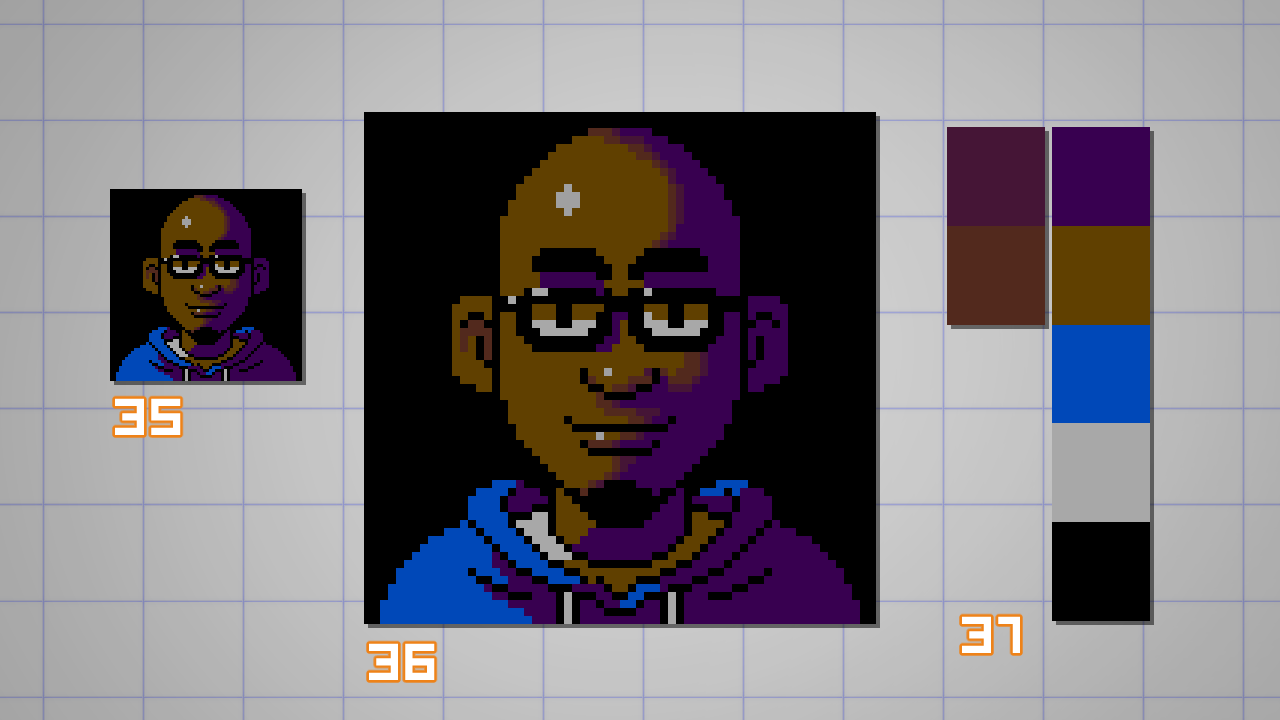
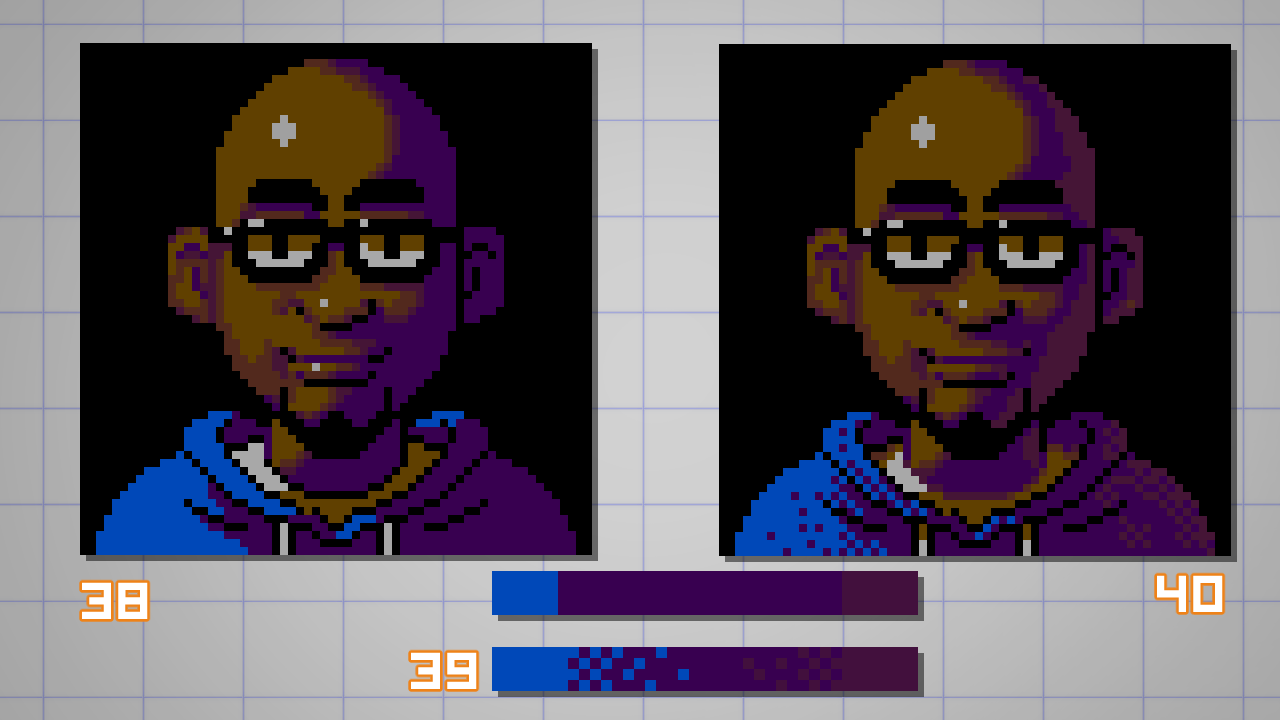
Using the two new extra colors, I increased the rendering on the face to add more depth, and softened some shadows on the lighter side of the portrait (38).
On the blue jacket, I decided to use the dithering technique to create the sensation of a gradient without adding colors (40). Dithering is an advanced technique where you break up solid transitions into a checkerboard-like pattern to create the illusion of a gradient (39).
This technique isn’t really recommended for skin or smooth surfaces since it could potentially make the surface look rather patchy. So, in this case, I thought it would be most appropriate to use this technique for a jacket, to recreate that rough texture.
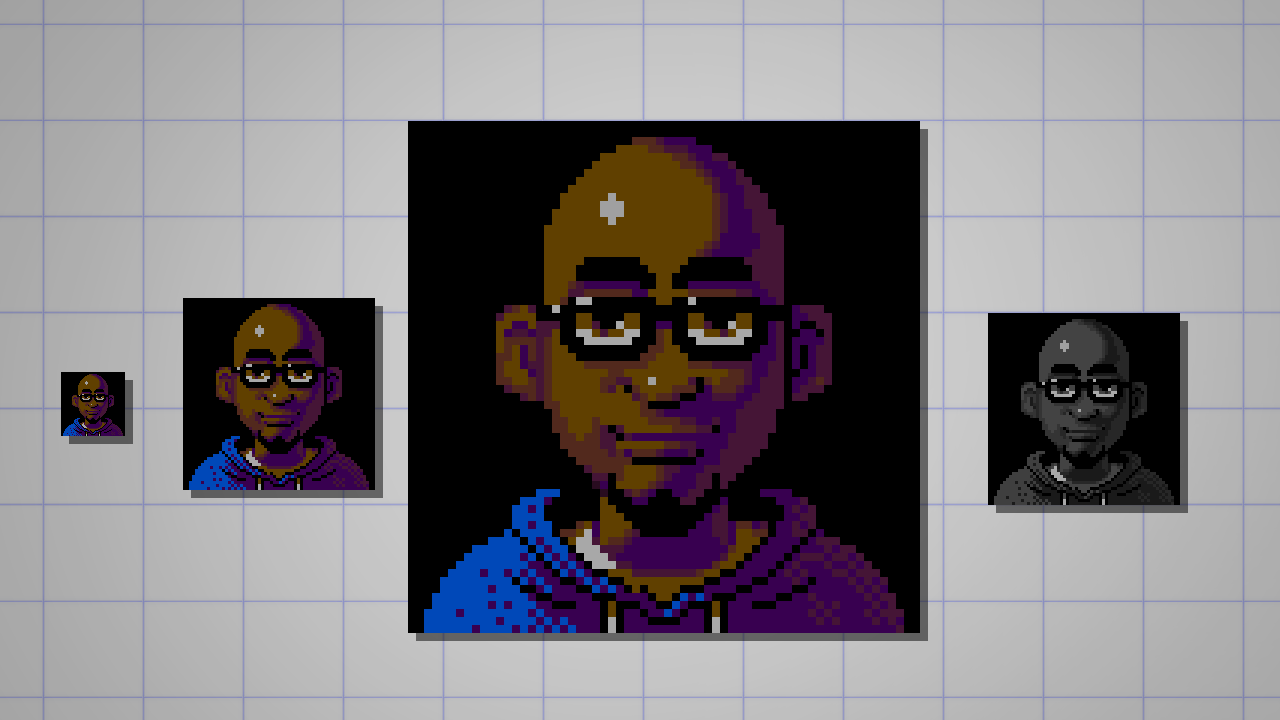
After some tweaking and a few more renderings, I finished painting the portrait.
I’m very happy with the final result because I was able to fit a lot of details into a 64×64 pixel artwork with only 7 colors – How do you feel about your result?
HOW TO EXPORT PIXEL ART
Last, but not least… When saving and exporting pixel art, use the GIF or PNG format.
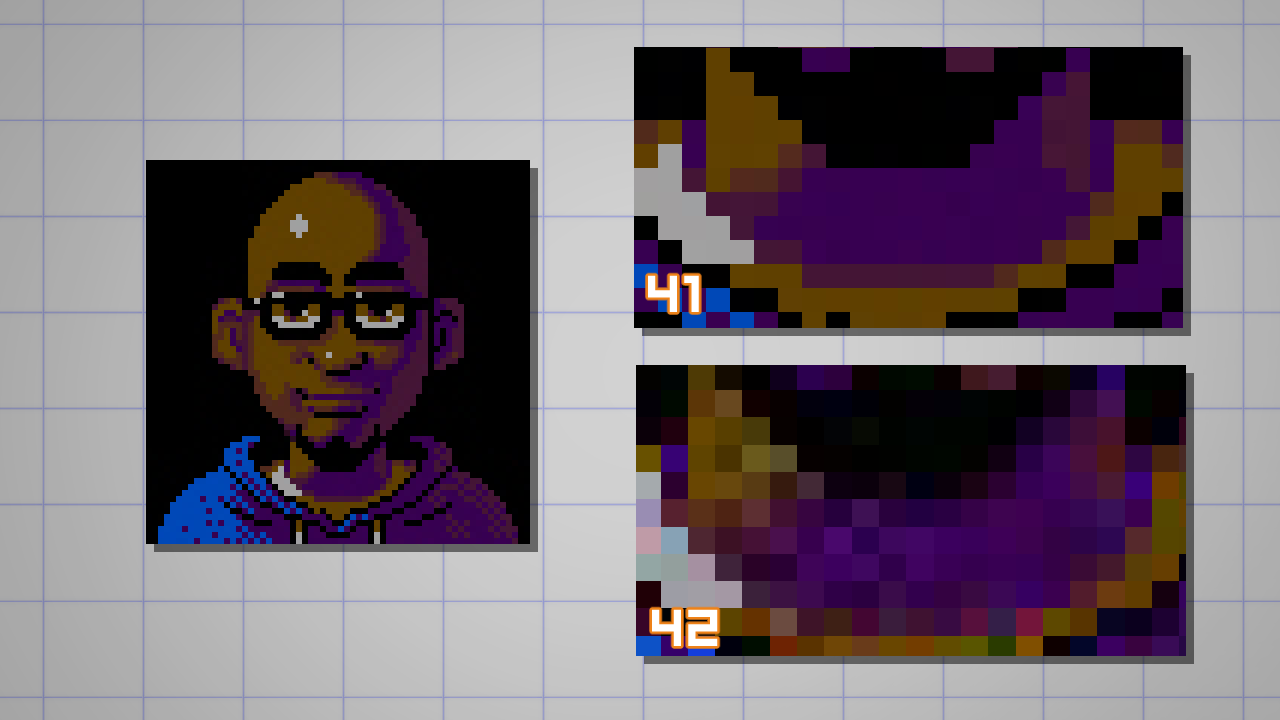
Avoid using the JPEG format, especially with any level of compression.
This will destroy all the love and care you used to create your pixel art.
Look at the examples below: a 99% compressed JPEG (41) may look okay from a distance, but it adds some unwanted colors. An 80% compressed version (42) will make any pixel artist bleed. So, don’t do that!
When it comes to posting on social media, you have to deal with the automatic compression of the platform. For Instagram, you’ll have no option because the system automatically converts and resizes the image to a low-quality jpeg. On Twitter, you’ll have a sharper, almost perfect image if the exported file is 506 pixels wide in PNG format.
And that’s it! You are now a proud owner of your very own pixel art.
Below is my minuscule, yet incredible, piece of art.
If you created yours using my tutorial, please let me know!
Although this tutorial was on how to make pixel art in CSP, you can also use a simple, single dot brush in Photoshop, Procreate, Ibis Paint, or any other app to follow this tutorial as well. I hope you enjoyed learning and creating your first pixel art drawing.
– dado

Artist Profile
Hi. I’m Dado (Dadotronic) Almeida and I draw and paint 90’s-videogame-inspired art. As a freelancer artist I create concept and production art for games and animation. My indie career is devoted to personal projects like Claws and Tusks (comic) and artwork that I make for fun or commissions. I also like to teach and share my discoveries about digital art, computer graphics, and mental health for artists.
https://dadotronic.com/
https://twitter.com/dadotronic
https://www.artstation.com/dadotronic
Interested in character art & design or what it takes to become a character designer?
Check out the link below!